Fin Type Presses
Used Fin Type Presses in Stock in Jackson, MI
Fin type presses (often called fin presses) are specialized high-speed presses designed to produce thin, precise fins used in
heat exchangers, radiators, condensers, and evaporators. These machines are built around repeatability,
tight feeding control, and consistent forming of delicate fin patterns. Many people associate fin presses with manufacturers like the
Oak Press Company, which is well known in the fin press space.
Fin presses are different from general stamping presses because they are typically part of a highly integrated system that includes precision feeding,
lubrication, and specialized tooling. The goal is consistent fin geometry, stable production output, and minimal scrap on thin stock.
Showing all 2 machines in stockSorted by price: low to high
-
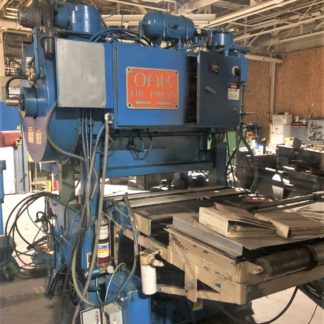
60 Ton Oak Press • Used Oak FP-2-48-615 Press
60 Request a Quote60
Ton48"
Bed R-L1.5"
StrokeSpeed: 100-300 SPM Model: FP-2-48-615 Oak1Year: 11.5" Str, 12" Sh, 48" x 34" Bed, 100-300 SPM,
***With complete OAK Feed Line including Progression Feeder and Fin StackerFin Press for SaleUsed High Speed PressesUsed Oak Stamping Press (Mechanical) for SaleMachine #5040
Jackson, MI Falahee BuildingSale Price: $ -
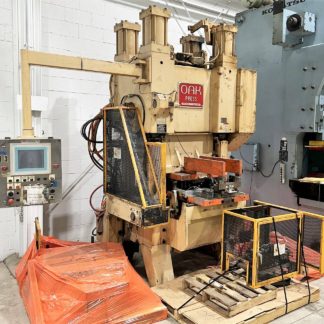
60 Ton Oak Press • Used Oak FP-2B` Press
60 Request a Quote60
Ton34"
Bed R-L1.5"
StrokeSpeed: 133-350 SPMModel: FP-2B` Oak1Year: 11.5" Stroke, 133-350 Strokes per Minute, 6" Ram Adjustment, Oak Tools Die IncludedFin Press for SaleUsed High Speed PressesUsed Oak Stamping Press (Mechanical) for SaleMachine #6647
Jackson, MI Cooper BuildingSale Price: $
What is a fin type press?
A fin type press is a press engineered to form fin patterns from thin strip material, commonly aluminum or copper. The strip feeds through the die set where
features like louvers, corrugations, offsets, and edge conditions are formed. Fin geometry is critical because it directly influences airflow, heat transfer,
and overall performance of the finished heat exchanger.
Common products made on fin presses
- HVAC condenser and evaporator fins
- Automotive radiator and charge air cooler fins
- Industrial heat exchanger fins
- Refrigeration coil fins
Why fin presses are unique
- Thin material control: Fin stock is often thin and easy to deform, so feed and die alignment must be consistent.
- High repeatability requirements: Fin geometry must stay consistent to meet airflow and thermal performance targets.
- Integrated feed systems: Fin presses commonly rely on specialized servo feeders and straighteners designed for thin strip.
- Tooling-driven results: Die design dictates fin type, pitch, louver geometry, and performance characteristics.
- Quality and scrap sensitivity: Minor variation can cause large downstream issues in assembly and performance testing.
Oak Press Company and fin press systems
The Oak Press Company name is often associated with fin type press technology and fin press production lines used in heat exchanger manufacturing.
In many facilities, “Oak press” becomes shorthand for the fin press station itself. Oak-style fin presses are typically selected when production requires
dependable forming of thin material, controlled feeding, and repeatable fin geometry at speed.
Key fin press terms
- Fin pitch: The spacing of fins, often tied to performance and airflow requirements.
- Louvered fins: Fins with louvers cut/formed to increase turbulence and improve heat transfer.
- Corrugated fins: Fins formed into waves or corrugations for structure and airflow behavior.
- Strip width and thickness: Defines stock geometry and influences feeding, forming force, and die setup.
- Feed accuracy: Critical for keeping features aligned and preventing die damage or scrap.
- Progressive fin die: Tooling that forms fin features as the strip advances through stations.
What matters most in fin press performance
Fin press results are primarily driven by consistency. Small changes in feed, lubrication, or die condition can show up as fin damage, inconsistent louver angles,
or geometry drift. The most important performance factors often include:
- Feed control and straightness: Stable strip path into the die is essential.
- Lubrication approach: Consistent lubrication can reduce galling and help maintain quality at speed.
- Die condition and alignment: Fin dies are precision tools; alignment and maintenance are critical.
- Press condition: Consistent slide motion, guidance, and repeatability matter more than raw tonnage.
- Material consistency: Variations in thickness and hardness can change forming behavior and springback.
Fin type press FAQs
What is a fin press used for?
Fin presses produce fins used in heat exchangers, radiators, and HVAC coils. The fin geometry increases surface area and manages airflow, which improves
heat transfer efficiency.
What materials are typically used?
Many fin presses run aluminum and copper strip. Material choice depends on the product, thermal performance requirements, corrosion considerations,
and downstream assembly methods.
Are fin presses high tonnage machines?
Fin presses are often more about precision and consistency than extreme tonnage. The loads can still be significant depending on die design and fin type,
but repeatable motion, guidance, and feed accuracy tend to be the dominant requirements.
What is the difference between a fin press and a general stamping press?
Fin presses are typically part of a tightly controlled system for thin strip forming with specialized tooling and feeding. General stamping presses can run many
operations, but fin production often requires dedicated equipment and process stability to maintain fin geometry at speed.
Why are louvered fins important?
Louvers can increase turbulence in airflow, which often improves heat transfer efficiency. The exact fin design is engineered for the target performance
and pressure drop characteristics.
What information helps match a fin press to an application?
- Fin type and geometry required (louvered, corrugated, offset, etc.)
- Strip width, thickness, and material (aluminum/copper)
- Desired fin pitch and tooling requirements
- Production rate targets and uptime expectations
- Feeding approach (servo feeder, straightener, lubrication method)
Common industries that use fin type presses
- HVAC manufacturing
- Automotive cooling systems
- Refrigeration and cold storage systems
- Industrial heat exchanger manufacturing
- Power and energy thermal management
Showing all 2 machines in stockSorted by price: low to high