Upenders
Used Upenders for Sale
An industrial upender (also called a coil upender, part upender, or tipping table) is designed to rotate
heavy loads from one orientation to another safely and predictably. Upenders are commonly used to turn loads 90 degrees, such as moving a steel coil from “eye-to-the-sky” to “eye-to-the-wall,” or rotating dies, molds, plates, and welded assemblies for easier handling and downstream processing.
Upenders are especially valuable in press and coil processing environments because they reduce forklift guesswork, minimize load shifting, and improve operator safety when heavy parts need to be rotated as part of normal workflow.
Showing all 7 machines in stockSorted by price: low to high
-
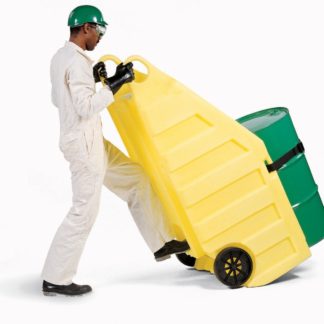
Enpac Poly-Dolly 70 Gallons Spill Capacity Upender
43 Request a Quote70
Capacity32
Coil Width26.5
Coil O.D.1Model 5300-YEYear: 1Heavy Duty Plastic Design, Lightweight, Perfect for Oil Barrels or Mineral Sprit Barrels (2 in Stock)Enpac Warehouse Handeling Automation for SaleUsed Material Handling MachineMachine #5363
Jackson, MI Falahee BuildingStarting Price: $300 -

6,000 lb. x 40" Wide West Bend Platform Tipper
70 Request a Quote6,000
Coil Capacity40
Coil Width60
Coil O.D.1ModelYear: 160" O.D. Capacity, 40" Wide Material Capacity, "V" Saddle with Wedge for Level LoadingWest Bend Material Handling Machinery for SaleUsed UpenderMachine #6317
Jackson, MI Falahee BuildingStarting Price: $ -

10,000 lb. West Bend Weld-Built
72 Request a Quote10,000
Capacity48
Width48
Coil O.D.West Bend Material Handling Machinery for SaleUsed Chain Driven TipperMachine #8503
Jackson, MI Cooper BuildingStarting Price: $ -

10,000 lbs. x 48" Braner Eng. Upender
78 Request a Quote10,000
Capacity48
Width54
Coil O.D.Braner Material Handling Machinery for SaleUsed Chain Driven TipperMachine #8501
Jackson, MI Falahee BuildingStarting Price: $ -
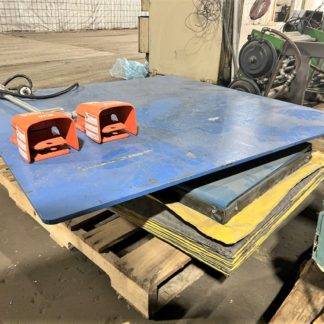
48" x 48" Hydraulic Scissor Lift
84 Request a Quote500
Capacity48
Platform Width60
Platform HeightCustom Warehouse Handeling Automation for SaleUsed Material Handling MachineMachine #6318
Jackson, MI Falahee BuildingStarting Price: $ -

20,000 lb x 48" Wide Dallas Coil Upender
96 Request a Quote20,000
Coil Capacity48
Coil Width72
Coil O.D.1Model DCU-20000Year: 199620,000 lb x 48" W x 72" OD ELECTRIC OVER HYDRAULIC UPENDERDallas Material Handling Machinery for SaleUsed UpenderMachine #8021
Columbia, TN WarehouseStarting Price: $ -

40,000 lb x 96" Wide Bushman Coil Upender
144 Request a Quote40,000
Coil Capacity96
Coil Width96
Coil O.D.Bushman Material Handling Machinery for SaleUsed UpenderMachine #6939
Columbia, TN WarehouseStarting Price: $
What does an upender do?
An upender uses a powered platform to rotate a load in a controlled motion, typically through a 90-degree arc. The load sits on a table or cradle, then the platform rotates to the new orientation. Many upenders are hydraulic, though some designs use mechanical drives depending on size and application.
Common uses for upenders
- Coil handling: Turning steel or aluminum coils for loading onto coil reels, uncoilers, and press feed lines.
- Die and mold handling: Rotating dies for inspection, maintenance, and safer placement.
- Plate and fabrication: Turning large weldments or plates to access different faces without risky picks.
- Assembly workflow: Presenting parts to operators at a safer, more ergonomic angle.
Coil upenders and “eye orientation”
Coil orientation is often described by the coil “eye” direction:
- Eye-to-the-sky: The coil is sitting flat, with the eye facing upward.
- Eye-to-the-wall: The coil is standing on its side, with the eye facing horizontally.
Many coil reels and uncoilers require a specific orientation for safe loading. A coil upender makes that change controlled and repeatable, especially for heavier coils where manual methods or forklift-only approaches can be risky.
Common upender styles
- Table upenders: Flat platform that rotates a load, often used for dies, plates, and general parts.
- Coil cradle upenders: Includes a cradle or V-block style support that helps prevent coil rolling or shifting.
- Floor-mounted upenders: Fixed install for repeatable workflow and higher capacity use.
- Pit-mounted upenders: Installed flush with the floor for easy loading and minimal footprint.
Key specs that matter
- Capacity: Rated load weight, including safety margin for off-center loads.
- Table or cradle size: Must match the load footprint (coil OD/width or part size).
- Rotation angle: Most common is 90 degrees, but some are designed for different angles.
- Load securing: Stops, clamps, cradles, or containment features for stability.
- Cycle time: How quickly the unit rotates, important for production changeovers.
- Power and controls: Hydraulic power unit sizing, voltage, pendant controls, and safety interlocks.
Why upenders improve safety and workflow
Rotating heavy loads with forklifts, chains, or improvised blocking can introduce shifting, sudden movement, and pinch-point risk. Upenders are designed to rotate loads in a predictable path with stable support, which helps reduce:
- Load shifting and instability during rotation
- Risk of coil rolling or uncontrolled tipping
- Repeated handling steps during coil changeovers
- Damage to edges, surfaces, or finished parts
FAQs: Upenders
What is an upender used for?
Upenders are used to rotate heavy loads, commonly coils, dies, molds, plates, and large fabrications, typically by 90 degrees. They support safer handling and smoother workflow in manufacturing environments.
What is a coil upender?
A coil upender is an upender designed specifically for steel or aluminum coils. It often includes a cradle or containment features to keep the coil stable during rotation, helping move between eye-to-the-sky and eye-to-the-wall orientations.
Why not just tip a coil with a forklift?
Forklift tipping can work in some cases, but it adds risk of load shifting, rolling, and inconsistent control. Upenders are purpose-built for controlled rotation, especially when coils are heavy, frequent, or located near production equipment.
Do upenders require pit installation?
Not always. Some upenders are floor-mounted. Pit-mounted designs are used when you want flush loading height and minimal footprint, but floor units can also be very effective depending on your handling method and available space.
What information helps match an upender to my application?
- Load type (coil, die, plate, weldment)
- Maximum load weight
- Load dimensions (coil OD, width, ID; or part footprint)
- Desired rotation angle (typically 90 degrees)
- How the load is loaded/unloaded (forklift, cart, crane)
- Power requirements and controls preference
Showing all 7 machines in stockSorted by price: low to high