Traveling Head Presses
Used Traveling Head Die Cutting Presses for Sale
Traveling head die cutting presses, often called clicker presses, are widely used for cutting shapes from sheet and roll goods
using steel rule dies. Unlike presses where the work moves under a fixed head, a traveling head press moves the cutting head across the cutting area, making it
easier to process large sheets, long rolls, or nested layouts without constantly repositioning heavy material.
These presses are common in industries that cut flexible materials and composites, including gaskets, foam, rubber, leather, textiles, plastics, and many
laminated products. When paired with the right cutting pad and die, a traveling head press can deliver fast, repeatable cutting with clean edges and
efficient material usage.
Showing all 2 machines in stockSorted by price: low to high
-
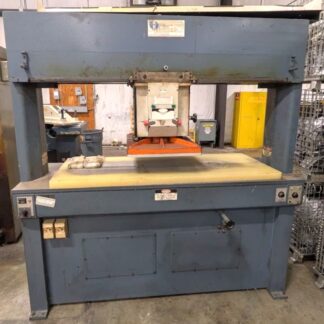
25 Ton Hudson Press • Used Hudson F63M/HS Press
25 Request a Quote25
Ton70"
Bed R-L5.75"
StrokeSpeed: - SPM Model: F63M/HS Hudson1Year: 1Approx. 5.75" Stroke, Approx. 7.75" Daylight, 70" x 25" Cutting Area with 63" x 23.75" x 2" Thick Cutting Board Currently InstalledDie Cutting Press for SaleUsed Hydraulic PressesUsed Hudson Typewriter Style Die Cut Press for SaleMachine #8050
Jackson, MI Falahee BuildingSale Price: $3,950 -

30 Ton Freeman Schwabe Press • Used Freeman Schwabe TH30-3079 Press
30 Request a Quote30
Ton79"
Bed R-L5.12"
StrokeSpeed: - SPMModel: TH30-3079 Freeman Schwabe1Year: 20125.12" Stroke, 6.46" Daylight, 30" x 30" Cutting Head, 79" x 30" Bed Area, New in 2012Traveling Head Press for SaleUsed Die Cutting PressesUsed Freeman Schwabe Hydraulic Press for SaleMachine #8487
**On Location**Sale Price: $
What is a traveling head die cutting press?
A traveling head die cutting press uses a movable cutting head that travels over a stationary cutting table (or platen). The operator places material and die
on the bed, then positions the head and cycles the press. This design helps with cutting larger blanks and long materials because the cutting surface remains
accessible while the head moves to where the cut is needed.
Why shops use traveling head presses
- Efficient cutting area: Large table area supports big sheets and long materials.
- Easy positioning: The head moves to the die location, reducing heavy material repositioning.
- Repeatable results: Consistent cutting stroke supports clean, accurate parts.
- Good for nesting: Helps maximize material yield by placing dies across the bed efficiently.
- Versatile materials: Common choice for cutting flexible, semi-rigid, and laminated products.
Common applications
- Gaskets and seals (rubber, cork, fiber)
- Foam and sponge products
- Leather goods and textiles
- Plastics and films
- Composites and laminated materials
- Automotive interior and insulation components
What materials can a traveling head press cut?
Traveling head die cutting presses are most often used for soft to semi-rigid materials. Material thickness, hardness, and die type drive the
tonnage required. Common materials include:
- Rubber, neoprene, EPDM
- Foam, EVA, sponge
- Leather, felt, textiles
- Gasket materials and fiber sheets
- Plastic sheet, film, and laminates
Key specs that matter
- Cutting force (tons): Must match your material thickness and die perimeter. More perimeter and tougher materials require more tonnage.
- Table size: Determines usable cutting area and how efficiently you can nest parts.
- Head travel: How far the head can move across the bed.
- Daylight and stroke control: Influences what dies and material stacks you can run.
- Cutting pad/plate setup: Cutting surface affects cut quality and die life.
Traveling head vs swing arm clicker press
Both styles are used for die cutting, but they serve different workflows:
- Traveling head: Larger cutting area and head moves across the table. Often preferred for bigger sheets, higher throughput, and better nesting.
- Swing arm: A swing arm head moves in an arc over a smaller work area. Often used for smaller parts, lighter duty work, and compact footprints.
FAQs: Traveling head die cutting presses
What is a clicker press?
“Clicker press” is a common term for presses used with steel rule dies to cut shapes from flexible sheet materials. Traveling head presses and swing arm presses
are both often called clicker presses.
How much tonnage do I need for die cutting?
Tonnage depends on the material type, thickness, and the total cutting perimeter of the die. A larger die perimeter requires more force than a small die,
even if material thickness is the same. If you share material type, thickness, and die size/perimeter, tonnage can be estimated more accurately.
Why does die cutting sometimes leave incomplete cuts?
Common causes include insufficient tonnage, worn or damaged dies, improper cutting pad condition, uneven material thickness, or incorrect stroke settings.
Proper pad selection and consistent setup usually solve most incomplete cut issues.
What is a cutting pad and why is it important?
The cutting pad is the surface the die presses into during the cut. It affects cut quality and die life. A properly maintained pad supports clean cuts,
reduces die damage, and improves repeatability.
Can traveling head presses be used with roll-fed material?
Yes, many operations use traveling head presses with sheet goods and roll goods. The larger cutting surface and head travel can be an advantage when staging and
advancing material between cuts.
What is “daylight” on a die cutting press?
Daylight is the open height between the platen and head (or upper structure) at the top of stroke. It impacts what die heights and material stacks can fit
safely and effectively.
What information helps match a traveling head press to an application?
- Material type(s), thickness range, and hardness
- Die perimeter or approximate part size
- Desired throughput and nesting approach
- Required table size and head travel
- Whether you run sheets, rolls, or both
Showing all 2 machines in stockSorted by price: low to high